- From Gabriel Wole Omoogun, London
South East London is set to host the Unity Cup’s showpiece moments tomorrow, with the tournament culminating in a double-header that blends competitive football with a full-scale cultural festival atmosphere.
Third-place playoff and the headline final
There is plenty at stake from the start, with Zimbabwe’s Warriors taking on India’s Blue Tigers in the third-place match as both sides look to finish the competition on a high.
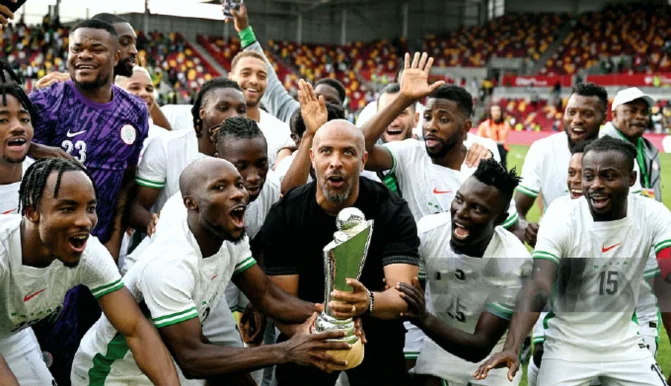
The main attraction follows later at Charlton Athletic Stadium, The Valley, where Nigeria’s Super Eagles will square off against Jamaica’s Reggae Boyz in a rematch of last year’s thrilling final. Supporters have already christened the clash the “Jollof Rice versus Rice and Peas Derby,” adding further spice to what is set to be a vibrant occasion.
How the teams reached the final
Both finalists earned their spots through hard-fought semi-final victories.
- Nigeria overcame Zimbabwe with an authoritative performance in the opening semi-final.
- Jamaica edged past India in the other last-four encounter, also winning 2-0 to set up the repeat final.
With the same scoreline in both semi-finals, the stage is perfectly set for a showdown that promises intensity from the first whistle.
Unity Cup’s wider meaning for the diaspora
This year’s Unity Cup has once again underlined that it is more than a football competition. The event has grown into a lively celebration of identity, music, food, and diaspora pride—essentially a carnival wrapped in the language of the beautiful game.
For Ireoluwa, a British-born Nigerian, the tournament carries particular significance.
“This is my second Unity Cup and I am looking forward to a Naija win. I am a Naija girl,” she said, smiling. “I was in Morocco to cheer the Super Eagles. Unfortunately, we couldn’t lift the AFCON, and obviously we are still sad about not going to the World Cup. But hopefully, we will have something to smile about come Saturday. Naija no dey carry last!”
Her words reflect a wider feeling among Nigerian supporters abroad, many of whom treat the Unity Cup as an annual reunion—an opportunity to reconnect, celebrate culture, and briefly tune out the constant stream of negative headlines from home.
Inside the teams: ambition, youth and what comes next
On the pitch, though, the mood is firmly focused on results. Super Eagles head coach Eric Chelle is targeting another trophy.
“Remember, it’s the first trophy I won, so I would like to win it again,” he said, speaking with calm confidence.
Team Coordinator Patrick Pascal echoed that mindset, highlighting the squad’s youthful drive.
“We don’t want to let go of the cup, though we are here with a young crop of players. Some of them are in Europe for the first time, but look at what they did to the Zimbabwe team,” Pascal said.
That blend of youth and fearlessness has been evident in Nigeria’s performances, with the side showing hunger, pace, and a style of football that continues to captivate fans.
Organisers, meanwhile, are already looking beyond this weekend. Rotimi Pedro of AfroSport revealed that planning for the next edition has begun before the current one has even concluded.
- They plan to add Paris to London for the next tournament.
- Talks are under way with the Chinese and Turkish federations, as well as another European country.
From Brentford last year to South East London this year, the Unity Cup is quickly becoming a fixture on England’s football calendar—and could soon broaden into something far bigger on a global scale.
For now, attention stays locked on Saturday at The Valley. Expect drums, expect dancing, expect colour—and, just as importantly, expect a final between two teams that know how to entertain. When Nigeria and Jamaica meet, it is never simply football; it is a cultural confrontation. And with both nations carrying plenty of swagger, tomorrow is shaping up to deliver it in abundance.