Twelve clubs drawn from across Nigeria’s four regional conferences will arrive in Lagos from tomorrow, 27 June, for the national finals of the Nestlé Milo Secondary School Basketball Championship. The event, widely regarded as one of the continent’s longest-running grassroots basketball pathways, features six boys’ teams and six girls’ teams chasing national bragging rights.
Quick facts
- Event: Nestlé Milo Secondary School Basketball Championship national finals
- Location: Lagos
- Dates: From 27 June
- Teams: 12 total (6 boys, 6 girls), representing four regional conferences
- Defending champions (boys): Father O’Connell Science College (Niger State)
- Notable matchups on the schedule: Lanlereke Academy vs St. Jude Girls Secondary School; Ado Grammar School vs Urhobo College, Effurun; Father O’Connell Science College vs King Amakree Academy; Davidhall International College vs Family Support Programme Secondary School
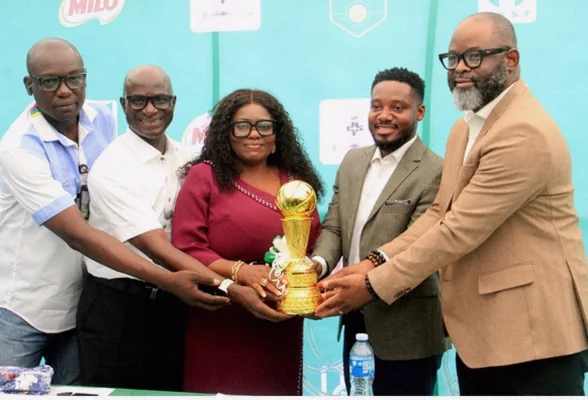
A press conference and draw ceremony in Lagos on Wednesday set the tone for what is expected to be a high-stakes weekend. Father O’Connell Science College of Niger State will lead the boys’ bracket as holders, while the girls’ line-up includes several sides that have never before reached this stage, adding extra uncertainty to the race for the title.
Nigerian School Sports Federation (NSSF) President Mrs. Bisi Joseph said the finals should deliver the same intensity seen in this year’s regional tournaments. She recalled a dramatic run of results, highlighting a boys’ clash between Katsina and Adamawa that swung until the final moments, with a one-point finish that left observers on edge throughout.
The scale of the championship continues to grow. Nestlé Nigeria’s MILO Category Manager, Gilbert Tweneboah-Koduah, said the programme has expanded since it began in 1999, now reaching more than 30,000 schools every year. For this edition, 13,256 registered schools took part, with each side competing in its region for the chance to represent its conference in Lagos.
Tweneeboah-Koduah tied the event’s purpose to Nestlé’s wider mission, stating that the company aims to use the power of food to improve quality of life for people now and across future generations. He said supporting children’s development through grassroots initiatives such as the Milo Secondary School Basketball Championship is a key way the commitment is put into practice.
Partnership and player pathways
Boladale Odunlami, Nestlé’s commercial manager and the representative of the company’s managing director at the gathering, said the championship’s goals have only strengthened over time. He described it as a platform for young Nigerians to identify talent, build confidence, and develop the character needed to succeed both on the court and beyond it.
Odunlami also pointed to how the programme has evolved into a network involving sports stakeholders nationwide, bringing together athletes, schools, coaches, teachers, and families. For him, the growth of those partnerships reflects the ambition driving the competition forward.
Tweneeboah-Koduah added that the strongest measure of impact is how the tournament has helped launch careers. He cited Precious Achonwa, Chimezie Metu, and Oluchi Ogbu among players whose journeys began through the Milo platform and later moved them onto the international stage.
He emphasised that the benefits go beyond trophies, arguing that the confidence gained when young players realise they can exceed expectations can influence how they approach education, future work, and their contribution to society. In his view, unlocking potential creates lasting change that lasts well after the final whistle.
Odunlami returned to the same theme while describing the route from regional games to the finals in Lagos. He stressed that each performance is underpinned by time spent training before and after school, the guidance of coaches, and the support provided by teachers and parents.
Mrs. Joseph said the 26th edition is especially meaningful because it has introduced new states into the national final picture. She noted that Katsina and Ekiti are both set to reach the finals, while even at conference level, Taraba featured in a way that is uncommon—an indication, she argued, of continued growth across the Milo Basketball Championship.
She also welcomed the return of established contenders. Mrs. Joseph said Government Secondary School, Gboko—once known for winning back-to-back titles and representing Nigeria at international school events—are back in the competition and have returned to the spotlight this time around.
The NSSF president made clear that the teams arriving in Lagos are carrying more than school pride. “These teams are no longer representing just their school, and not just their state — they are representing their region,” she said, adding that the expectation is for hard, fair play and a champion earned on merit.
Inclusion, clinics and education
The championship’s reach extends beyond able-bodied competition. Olusola Okanlawon, representing the National Association of Special Educators (NASET), said the organisation remains committed to working with Nestlé Nigeria to use sport to highlight the abilities of students with disabilities.
“There is ability in disability,” Okanlawon said, pointing to Temitope Victoria, a former participant who later competed at the Paralympic Games. He added that NASET will continue partnering with Nestlé Nigeria PLC to showcase the talent of its students.
NSSF Secretary Dr. Funsho Oba Usman said the tournament is structured to develop participants off the court as well. He noted that coaching clinics and mentorship sessions are included in the programme, and that there is also an educational component featuring former internationals who speak to the children and mentor them.
“Education is as important as the sport they are getting,” Dr. Usman said, describing the added sessions as part of how the federation builds lasting value around competition rather than treating it as a one-week event.
Mrs. Joseph then delivered a direct message to every player travelling to Lagos. “You are champions already,” she said, adding that the values taken from participating in the event—and the fact they have reached the national finals—make them champions in their own right.
Tweneboah-Koduah closed by capturing the spirit Nestlé says has defined the tournament across 26 editions. He told young athletes that regardless of whether they lift the trophy, the habits they build, the friendships they form, and the values they embrace will shape their future long after the tournament ends.
The championship is supported by the Nigerian School Sports Federation, the Nigerian Basketball Federation, the Nigeria Collegiate Sports Federation, and federal and state ministries of Education, Youth and Sports.
The 12 finalists earned their places through four regional conferences, with the matchups set for the opening slate in Lagos as follows.
Savannah Conference: Family Support Programme Secondary School, Katsina (boys) and Government Secondary School, Zing, Taraba State (girls).
Central Conference: Father O’Connell Science College, Niger State (boys, defending champions) and Government Secondary School, Gboko, Benue State (girls).
Atlantic Conference: King Amakree Academy, Rivers State (boys) and St. Jude Girls Secondary School, Bayelsa State (girls).
Western Conference: Davidhall International College, Lagos State (boys) and Ado Grammar School, Ekiti State (girls).
Wildcards: FCT Abuja and Delta State qualified as best runners-up in the boys’ category, while Urhobo College, Effurun (Delta State) and Lanlereke Academy, Osun State took the girls’ spots.
Game 1 (Girls): Lanlereke Academy vs St. Jude Girls Secondary School — 13:00
Game 2 (Girls): Ado Grammar School vs Urhobo College, Effurun — 14:30
Game 3 (Boys): Father O’Connell Science College vs King Amakree Academy — 16:00
Game 4 (Boys): Davidhall International College vs Family Support Programme Secondary School — 17:30