
South Africa’s TV industry has recently seen a noticeable rise in explicit storylines—and while these productions can pull in major attention, questions about safety and consent are increasingly being raised about what actually happens behind the scenes.
Key takeaways
- Actress Nirvana Nokwe-Mseleku alleged that she was sexually assaulted by Bonko Khoza in 2023 while filming the first episode of Red Ink.
- Bonko Khoza has denied the allegations, but discussion around conduct in film and television has continued to intensify.
- Director Sara Blecher says the growing use of intimacy co-ordination emerged after filmmakers realised older methods could put people at risk.
- An intimacy co-ordinator’s job is to help sex scenes read as authentic on camera while safeguarding performers’ boundaries.
- Tools used to imply nudity can include barriers and props such as silicone pieces and pillows, alongside agreed safe-word systems.
- In South Africa, the daily cost for a stunt or intimacy co-ordinator is reported to range from R4,000 to R12,000.
Allegations around a thriller’s first episode
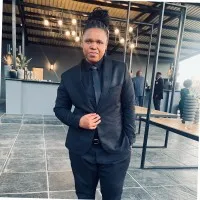
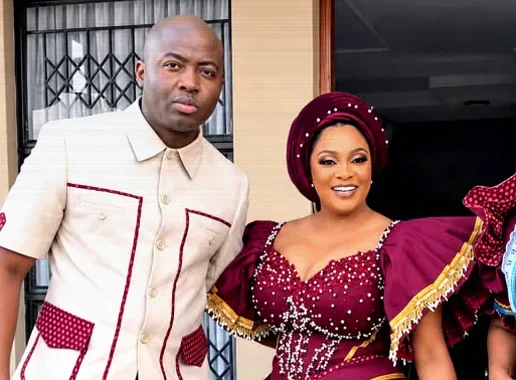
Actress Nirvana Nokwe-Mseleku recently claimed that she was sexually assaulted by Bonko Khoza in 2023 during production of the first episode of the thriller series Red Ink. The show draws from a novel by Angela Makholwa and centres on Lucy Khambule, whose life takes a dramatic turn when an imprisoned serial killer—Napoleon “The Butcher” Dingiswayo—reaches out to have his story written.
While Khoza has rejected Nokwe-Mseleku’s accusations, the conversation has expanded beyond the original incident, spilling into wider debate about how people are protected on local film and TV sets.
Why intimacy co-ordination is becoming standard
Director Sara Blecher, whose credits include work on the sets of Netflix, HBO, Showmax, BET Africa, and more, explained that the push toward intimacy co-ordination grew out of a recognition that traditional filming practices were leaving performers vulnerable.
She said that when international streaming platforms entered the country, they did not arrive with the same constraints as local broadcasters, which made it easier to produce intimate material. Blecher argued that intimate content performs well because it draws attention and keeps audiences engaged.
Blecher also described the core purpose of intimacy co-ordination: to make intimate scenes look convincing on camera while protecting actors from harm.
“To be able to show [sex scenes] in a way that is safe is the point,” she said, adding that the goal is not to film explicit moments in a way that could enable further abuse—hence the need for an intimacy co-ordinator.
She explained that the process typically begins with meetings with directors to understand what they want to achieve in a scene. The co-ordinator then meets with the actors involved—both together and separately—to learn their boundaries, carry out a risk assessment, and plan how to reduce those risks before any intimate filming begins.
From the first consultation, Blecher said, the agreements are documented because the intimacy co-ordinator acts as a witness on set. The co-ordinator keeps track of the performers’ limits, what everyone has accepted, and whether those boundaries are being respected in real time.
How boundaries are handled on set
Blecher listed several techniques and items used to suggest nudity and sexual activity while reducing direct exposure for performers. These can include adhesive strapless thongs, genital pouches, c-strings, silicone barriers, and even pillows.
She said teams use barriers, masking, and related methods so the scene still communicates the story directors want, but within the parameters that actors have shared with one another, with the co-ordinator present.
Actors are also given safe words, Blecher said, so that the moment someone becomes uncomfortable, they can stop the action immediately.
Although filming usually pauses only when a director calls for it, she added that on an intimate scene set, any actor can halt the scene at any stage if they feel uneasy. She noted that getting swept up while acting can happen naturally, so if an actor feels the moment is going too far, they can say the safe word and both performers stop.
In addition, Blecher said an intimacy co-ordinator can call a halt if they observe that someone is being violated or that agreed boundaries are not being followed.
Safety costs and calls for regulation
Blecher also addressed the practical side of implementing safeguards, saying that hiring a stunt or intimacy co-ordinator in South Africa—on a day-by-day basis—can cost between R4,000 and R12,000.
She noted that industry professionals have for years pushed for clearer regulations governing safety procedures.
Blecher pointed to a tragic example from 2018: actor Odwa Shweni died after falling to his death during a movie rehearsal at Sterkspruit Waterfall in the Drakensberg, KwaZulu-Natal. The incident intensified scrutiny around safety protocols for performers while they are working.