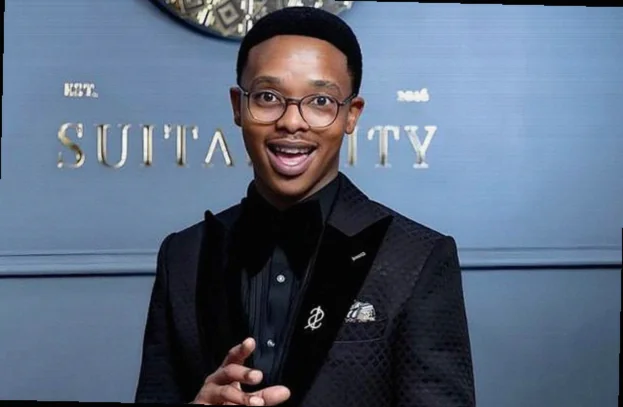
For Sinemivuyo Mpulu, the climb toward becoming one of South Africa’s fast-rising faces in media didn’t begin with a viral clip or a well-timed series—it started years earlier, long before “TikTok Billing” and the return of the beloved “Top Billing.”
Mpulu grew up in the Eastern Cape, in a household where media, storytelling, and performance were part of everyday life. He says that environment quietly shaped the instincts and confidence he’s using now to build his career in front of and behind the camera.
Speaking about his roots, he shared that he was raised in the Eastern Cape with a “very big family,” and that his days were filled with activities that sharpened his public presence. From cultural events to dramatic arts and public speaking programs, he immersed himself in anything that encouraged performance and communication.
“I was very much involved in cultural activities, dramatic arts and public speaking programs back then,” Mpulu said.
Early media influences
- Raised in the Eastern Cape with a family closely connected to media and storytelling
- Involved in cultural activities, dramatic arts, and public speaking as a young person
- Father distributed newspapers; mother worked in radio plus public speaking and emceeing
- Started exploring voice-over work after volunteering at a radio station in 2016
- Created community and training plans via a project called “The Voiceover Factory”
- Launched South Africa’s first-ever Voiceover Awards
- Believes consistency and action are key for young creatives
Media exposure, he added, came naturally from early on. His father would hand out newspapers, putting him in the path of current events and stories, while his mother worked in radio—also taking part in public speaking and emceeing.
“My mom was in radio and very much involved as well with public speaking and emceeing. I believe those are the two people that I kind of drew inspiration from,” he said.
Those influences eventually evolved into a multi-hyphenate career spanning voice-over work, content creation, and television presenting—an evolution Mpulu says began with a specific spark during his teenage years and took shape over time.
Voice-over spark in 2016
Mpulu explained that his interest in voice-over artistry took off in 2016, when he volunteered at a radio station. During a break in programming, he became fixated on the voices he was hearing, turning a moment of listening into a question he couldn’t shake.
“I’m like, who are these voices?” he recalled.
He then went searching online to learn more, but quickly noticed something that didn’t sit right. In his view, much of the instruction available to him was coming from voices and creators in other regions—meaning the lessons didn’t always feel relatable or accessible to him.
“Most of the lessons being taught online were by Americans and Europeans and people that I couldn’t relate to,” he explained.
That realization ultimately pushed him toward building his own answer: “The Voiceover Factory,” a community designed to develop African voice talent while giving people access to practical knowledge about the industry.
From TikTok to a luxury-style revival
Mpulu’s now-viral “TikTok Billing” series, he said, also grew out of spotting a gap in South African media. The concept came after he listened to discussions around the cancellation of the iconic TV show “Top Billing,” and decided to recreate that luxury lifestyle energy for a digital audience.
He said he was met with strong early pushback from viewers—enough momentum to encourage him to go all-in on the idea. “I had about 4,000 people just pushing me to do my own thing and something, a replica of Top Billing,” he said.
Using TikTok as his platform, Mpulu built a modern version of the format, blending luxury storytelling with celebrity culture and aspirational lifestyles. While the series gathered attention and grew, he admitted he never expected it would eventually connect him to the official return of “Top Billing.”
“I actually had no idea where TikTok Billing would get to, but in the back of my mind, this was a great way of positioning myself as an asset to someone who’s valuable in the media space,” he said.
He also credited his staying power to consistency and a genuine passion for presenting. Even when the work didn’t feel immediately rewarding, he kept going—until, as he put it, the right people finally responded.
“All of a sudden, the right people responded to it, and it was the Top Billing team,” he said.
Mpulu then addressed the wider chatter about whether “TikTok Billing” was the reason “Top Billing” came back. He argued that the digital series helped spark interest, but he believes the show was likely returning regardless—his work, at most, accelerated the moment.
“We definitely did play a big role, but I do believe the show was going to return anyway. We just honestly sparked the action,” he explained.
Changing the voice-over industry
Beyond creating content, Mpulu is also focused on reshaping voice-over recognition in South Africa. His latest move is the launch of what he describes as the country’s first-ever Voiceover Awards—an initiative aimed at honoring artists who have influenced South African media for decades.
Instead of waiting for doors to open, he chose to build a platform that elevates creators who, in his view, have never received the acknowledgement they deserve. “These are the voices that shape South African media narratives, but they’ve never been honoured or recognised,” he said.
The awards, he added, will include new sign language categories this year, with the goal of elevating African voices on a global stage while also strengthening the local industry. “We want to create a legacy of access to information. We want to empower African voices and prepare them for the future of the industry,” he highlighted.
Advice for young creatives
For younger creatives who still hesitate to start, Mpulu’s message is direct: don’t overthink it—move. “Get up and take action. Get up and take action. Get up and take action,” he said.
He also framed creativity as something that should be fearless but responsible, adding that the mindset he’s built comes from repeatedly choosing to create even when results aren’t instant. “That is really what has given me a very tough and firm creative bone. I’m not afraid to create, I’m not afraid to express my thoughts creatively and push an agenda responsibly,” he added.