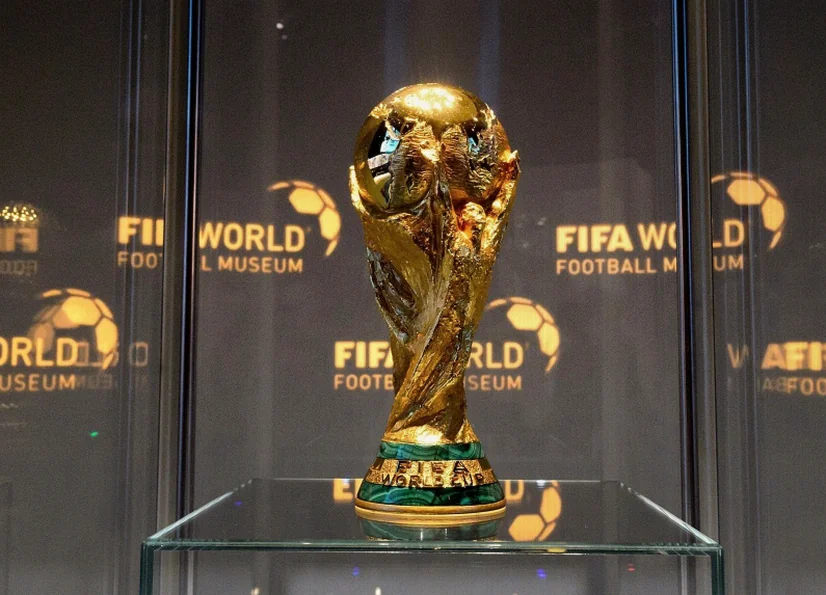
The 2026 World Cup is set to kick off just over a month from now, with supporters gearing up to cheer on their teams across Canada, the United States and Mexico—while others watch from home.
Key takeaways
- The tournament field has been expanded to 48 teams, with 10 African sides earning places for the first time.
- Africa’s strongest outfits have repeatedly shown they can upset major European and South American powers, following Morocco’s 2022 run.
- South Africa return to the World Cup after hosting in 2010, and they open their campaign against Mexico.
- Ivory Coast are back after a 12-year gap, bringing attacking talent plus a defence that has looked sharp in recent friendlies.
- DR Congo are making a World Cup appearance since 1974 and will be aiming to turn a long absence into an advantage in tough Group play.
South Africa aim to make home-grown familiarity count
South Africa supporters will be focused on their team’s first World Cup participation since the nation hosted the tournament in 2010. With the competition drawing nearer, fans are preparing to keep track of the latest developments involving Bafana Bafana and consider ways to back the side.
The squad’s most persuasive asset is how well the core group know one another. Many of the players come from the Premiership’s two leading clubs, Mamelodi Sundowns and Orlando Pirates, while Lyle Foster of Burnley adds another dimension in the attacking areas. Mohau Nkota is also expected to provide a real edge on the right-hand side.
South Africa kick off their campaign against Mexico, then take on the Czech Republic and South Korea. Group A is described as a difficult assignment, but Hugo Broos’ team has already demonstrated it can upset expectations—finishing ahead of Nigeria in Group C during the qualifying phase.
Ivory Coast and DR Congo bring momentum and a point to prove
Ivory Coast return to the World Cup after a 12-year absence, armed with quality throughout the lineup. Up front, they have options including Amad Diallo and an emerging talent in Yann Diomande, while the midfield is bolstered by Ibrahim Sangare and Franck Kessie.
Defence is where the side is particularly strong. Evan N’Dicka leads a tough unit that also includes Odilon Koussounou and Wilfried Singo. Their recent form has been encouraging as well, highlighted by a 4-0 dismantling of South Korea, followed by a 1-0 win over Scotland in friendly matches.
Placed in Group E alongside Germany, the 2023 AFCON champions are expected to compete directly with Ecuador for second place. Even so, they retain the ability to spring surprises against more fancied opponents.
DR Congo, meanwhile, are participating in the World Cup for the first time since 1974. The long stretch away from the tournament may invite underestimation, but the past suggests they can be difficult to handle.
At AFCON, they managed a 1-1 draw with Senegal, and Algeria required a winner in the 119th minute to edge past the Leopards. Their World Cup hopes hinge on Premier League-quality influence, with Yoane Wissa, Aaron Wan-Bissaka and Noah Sadiki all expected to play major roles.
Optimism for DR Congo is also shaped by their Group K opponents. Portugal have plenty of talent but were shown to be vulnerable in qualification, including a 2-0 defeat to Ireland. Colombia’s journey has also exposed weaknesses, with results in their qualifiers against Bolivia, Peru and Paraguay pointing to problems that can be exploited, while defeats to Croatia and France have fueled debate about their ceiling.
Uzbekistan are viewed as the weaker team compared to DR Congo. If Sébastien Desabre’s squad can replicate their history of making life uncomfortable for opponents—especially by turning pressure into moments—then they could find a route toward qualification for the knockout stage.