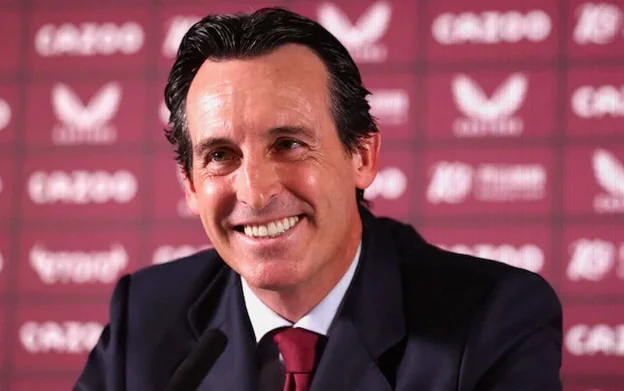
Aston Villa boss Unai Emery has played down talk that he is the “king” of the Europa League, insisting that his past record in the competition should be treated as irrelevant ahead of Saturday’s final against German outfit Freiburg. Villa meet Freiburg at Besiktas Park in Istanbul, looking to make a statement in Europe’s second-tier club competition.
Emery, 54, arrives at the match aiming for what would be his sixth European final as a manager in the Europa League. Villa will take on Freiburg tonight, with the final framed as the start of a fresh chapter for the club.
Speaking to reporters, Emery rejected the idea of any undisputed status, saying his previous triumphs do not carry over into the present. Instead, he pointed to the job of preparing properly for a single decisive game, rather than leaning on past success.
“I am not a king in this competition,” Emery said. “I’m focused on winning, and on launching a new era for Villa.”
He added: “Now is a new way, a new moment and hopefully a new winner. Each match you must try to build the right mentality during the whole season, not just for the final.”
Emery’s European pedigree is well established. He guided Sevilla to three consecutive Europa League titles between 2014 and 2016, before adding another trophy with Villarreal in 2021. He also reached a final with Arsenal in 2019, where his team were beaten by Chelsea.
For Villa, the stakes are particularly high, with the club chasing their first major trophy in three decades.
Emery said the team must approach the occasion with emotional control and tactical focus, adding that the run of matches leading into the final has already brought with it a heavy emotional load. “Now is a new experience that we will have tomorrow,” he said. “It is important in our structure how we are managing our emotions. We have played a lot of matches and had a lot of emotions.”
Freiburg, meanwhile, are set to test Villa in their first appearance in a major European final. Emery believes the German side’s arrival at this stage will make for a demanding contest.
He also addressed the psychological challenge of a final, arguing that pressure should be treated as a positive force rather than something to fear. “We must try to understand the pressure as something positive, not negative,” Emery said.
To meet that challenge, Emery stressed the need for confidence and tempo. “We have to play with personality, with confidence,” he added. “And to do that we have to play with intensity.”