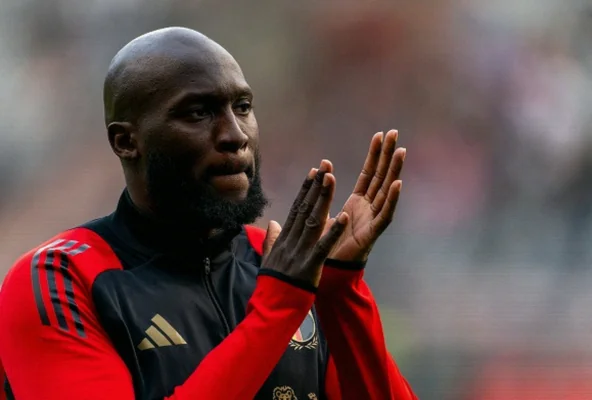
Belgium striker Romelu Lukaku admitted he never expected to be at the World Cup after a season hit by injury, but said he is ready to make an impact wherever he’s used as the Red Devils embrace his “super sub” role. Despite limited minutes earlier in the year, he has looked sharp in Belgium’s campaign and is now preparing for a knockout meeting with Senegal.
Key takeaways
- Lukaku said, due to how his season unfolded, he “normally” should not have made it to the World Cup.
- He logged only a little more than an hour of action all season for Napoli, yet has featured for Belgium for nearly double that time at the tournament.
- The forward has produced a goal and an assist in 121 minutes and has been particularly influential as a substitute.
- Belgium advanced from Group G to face Senegal in the round of 32 on Wednesday.
- His World Cup momentum included late-game impact against Egypt, helping trigger an equaliser shortly after he came on.
From injury doubts to a decisive bench impact
Lukaku told reporters on Monday that he is simply grateful to be in Qatar, pointing to the difficult nature of his recent campaign. He suggested that, based on that form and fitness, his participation in the World Cup was not something he would have expected.
He added that, for him, the focus is on being available to play and on helping the team swing moments in matches. With a mindset shaped by his limited role, he described his approach as going “with the flow” and leaning into the chance to be decisive when called upon.
At 33, the striker appears to be operating without full match fitness, but his tournament output has been notable. In 121 minutes at this World Cup, he has contributed a goal and an assist, with his best work coming from the bench rather than from the start.
How Lukaku changed Belgium’s group matches
Belgium’s opening match against Egypt followed a tough script before Lukaku entered. The team were down 1-0 and struggling for answers until his introduction, which immediately disrupted the game and helped lead to an own goal equaliser about 20 seconds later.
Against Iran, Lukaku was in the starting XI and played for more than an hour as Belgium and Iran battled to a goalless draw. Then, in the following group game versus New Zealand, he again made his presence felt quickly after coming on, scoring shortly after his introduction to help Belgium move back to the top of the group.
Lukaku explained how he prepares for substitute appearances, saying he uses the time to study where space is likely to open up and looks to slip into those areas. He also highlighted the importance of synchronising with the teammates already on the pitch and those who share the bench, stressing that a substitute’s timing and attention must match what’s happening around them.
Golden generation pressure and Senegal challenge
Lukaku is among the final members of Belgium’s so-called golden generation, with coach Rudi Garcia referring to the group as the “oldies.” While there is still a realistic opportunity to deliver on the talent’s promise, Lukaku insisted Belgium must block out external distractions and concentrate on the difficulty of their next opponents, Senegal.
He warned that the matchup will be a major test, particularly on the physical and tactical fronts. Lukaku said Senegal are technically strong, tactically well-drilled, and capable of making a difference physically—meaning Belgium must be ready for a high-intensity battle.
He also touched on the attention surrounding the team, noting that some outsiders may not fully understand football, but that Belgium feel well-informed. In the dressing room, he said the game will likely be a 50-50 contest, and urged everyone to see what the match itself brings.